
Zakat on Gold and Silver: The Basics of Nisab
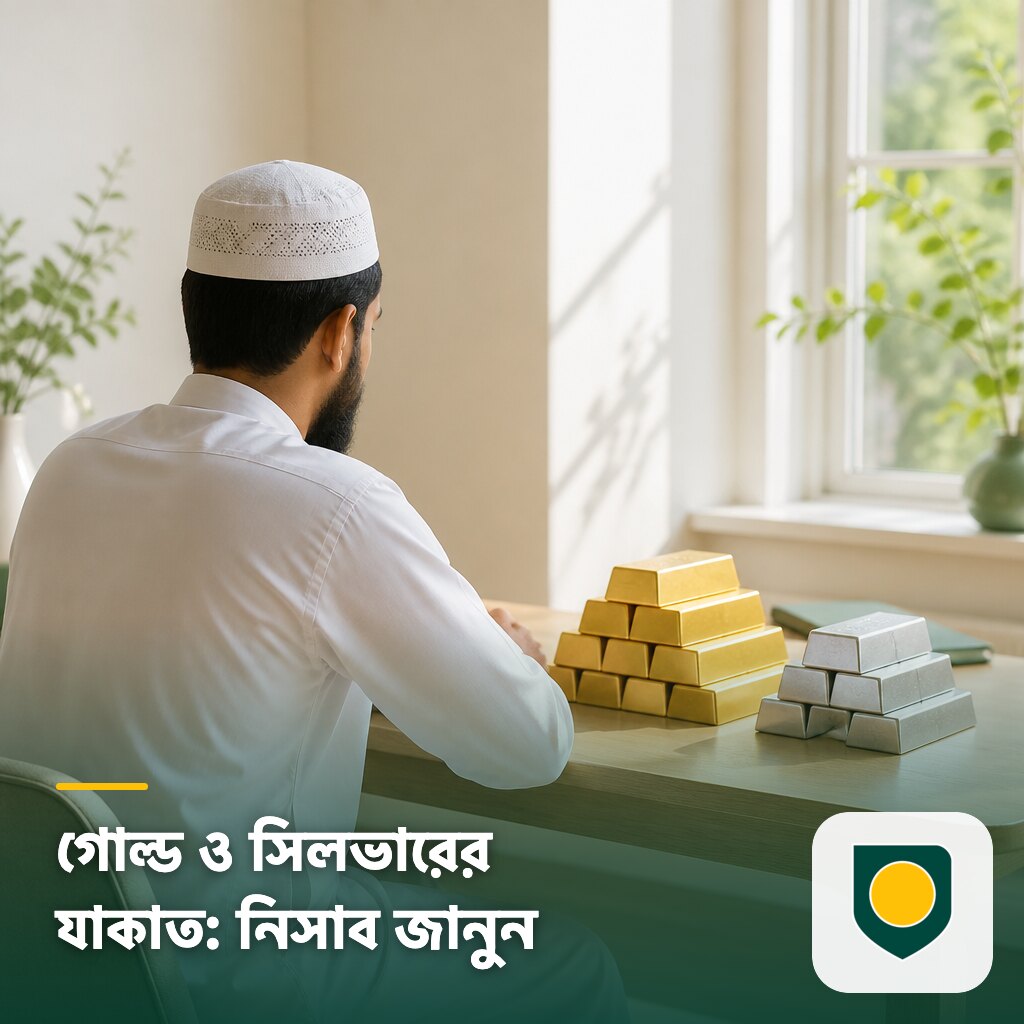
Every household keeps some kind of ledger. In some homes it is a proper book with ruled columns; in others it is the back of an old calendar, or simply the memory of the eldest member of the family. Zakat asks us to keep that ledger honestly once a year, and to remember that a share of what we hold was never wholly ours to begin with.
This article is a simple introduction, not a ruling. Where the scholars differ, we say so, and we ask you to take your own case to a qualified scholar you trust.
What nisab means
Nisab is the minimum amount of wealth a person must own before zakat becomes due on it. Below the nisab, there is no zakat on that wealth. At or above it, and once the other conditions are met, zakat becomes an obligation.
For gold and silver, the figures most commonly cited in Bangladesh are:
- Gold: seven and a half tola, roughly 87.48 grams.
- Silver: fifty two and a half tola, roughly 612.36 grams.
You may see slightly different gram figures in different books, because the conversion of old weights has been calculated in more than one way. The principle is the same.
The other conditions, briefly
Owning the nisab is not the whole matter. In broad terms, scholars also mention:
- Full ownership. The wealth is yours, under your control.
- A full lunar year. The wealth has stayed at or above the nisab for one lunar year, often called the hawl.
- Free of pressing debts. How debts are counted is one of the questions on which opinions differ.
The rate most widely known is one fortieth, that is 2.5 percent, of the zakatable wealth.
Questions on which scholars differ
It would be easy to pretend everything is settled. It is not, and honesty serves the reader better than tidiness. Some of the common points of difference are:
- Jewellery for personal use. Some schools of thought hold that zakat is due on it; others hold that it is not.
- Combining gold, silver and cash. Whether these are added together to reach the nisab, and whether the gold or the silver standard should be used for mixed wealth.
- Purity. How a 22 karat item, which is 91.6 percent gold, is weighed for nisab purposes.
These are exactly the questions to take to a scholar. A clear answer for your own situation is worth more than any general article, including this one.
Keeping the ledger simple
If you hold gold or silver bars, a little order goes a long way:
- Keep the certificates. A purity certificate tells you exactly what you own, in karat and in grams.
- Note the date. Write down when your holdings first reached the nisab, so the lunar year can be counted.
- Check the value on the day. Zakat is generally reckoned on the market value at the time it falls due, so look up the rate on that day rather than guessing.
A word about GoldenCYZ
GoldenCYZ sells 22 karat (91.6%) gold bars and silver bars of 99.5% purity and above, each with a purity certificate. Bars of known weight and purity make the yearly reckoning a good deal easier than a drawer of mixed pieces whose karat nobody remembers.
Wealth that is counted honestly tends to be kept carefully. And a ledger kept carefully, by the grace of Allah, is rarely the cause of a sleepless night.
Buy certified gold and silver bars from GoldenCYZ.
Buy Now