
Gold, the Merchant's Old Companion: A Look at World Trade
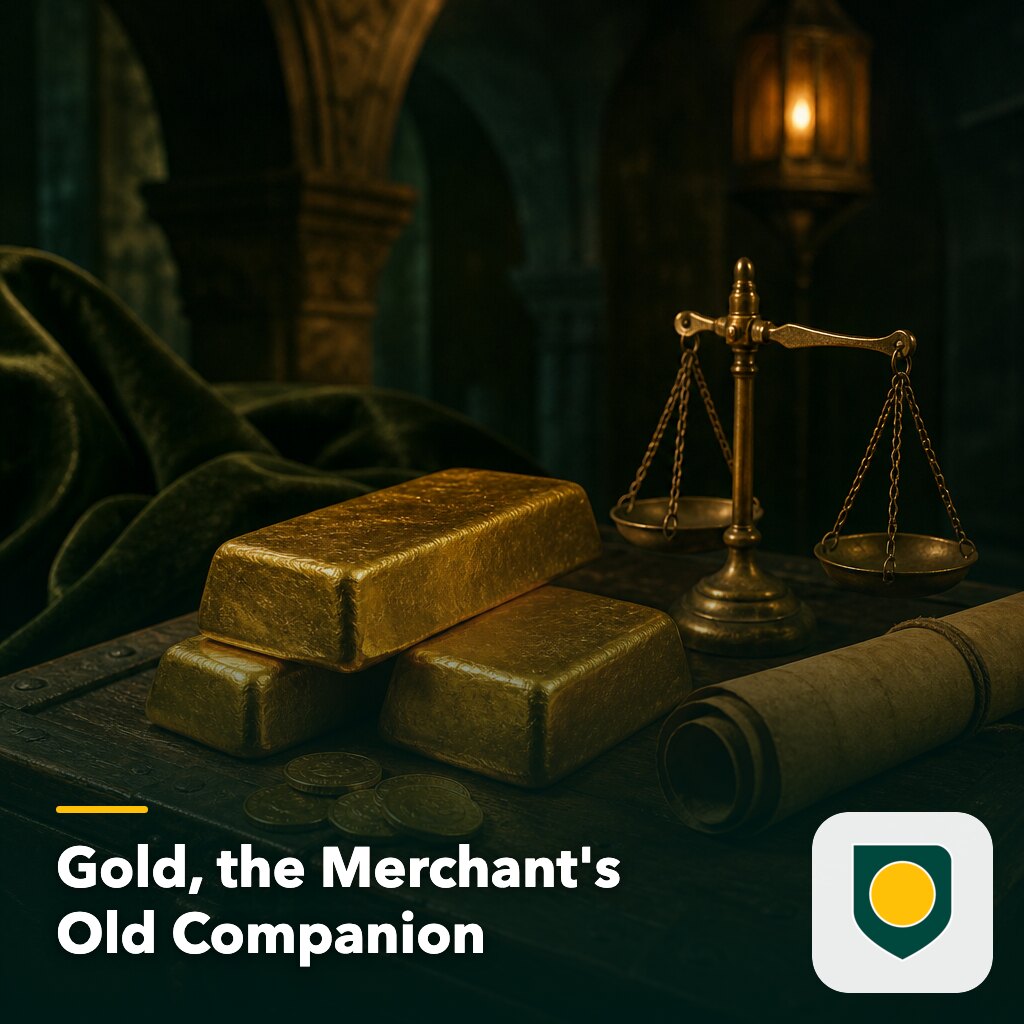
Picture a trader of long ago, standing on a quay in a port where nobody knows his name, his father's name or his village. He has a cargo to sell and a long road home. What does he want in his purse? Not a note signed by a friend of a friend, certainly. He wants something the stranger across the counter will accept without a long argument. More often than not, that something was gold.
It is a small story, but it explains a great deal. Trade has always run on trust, and where trust is thin, people reach for things that need none.
Why gold travelled so well
Ask any old merchant, if you could find one, and he would give you three reasons, probably over tea:
- It is recognised everywhere. A man in a distant market may not speak your language, but he knows gold when he sees it.
- It keeps. Gold does not rust or rot, so a long sea voyage does no harm to it.
- It is compact. A great deal of value fits into a small pouch, which matters when the road is long and the donkey is tired.
Silver served beside it for the smaller purchases, as a younger brother does in a family business. Between them, the two metals carried a good part of the world's trade for a very long time.
What changed, and what did not
Today a payment crosses the world in a moment and nobody carries a pouch of anything. Ledgers are electronic, ships are enormous and the telephone has replaced the letter. Yet the old habit has quietly survived. Even now, banks and whole nations keep a share of their reserves in gold. Not because they are old fashioned, but because a metal that needs nobody's promise is a comfortable thing to have in the cupboard.
Mind you, this is history, not a prophecy. The price of gold rises and falls, and no one can tell you next month's rate. What the long story shows is only that people in many ages and many places have chosen to keep a portion of their wealth in something real.
What this means for an ordinary saver
You are not a merchant crossing a desert, and nobody is asking you to pay the grocer in gold. Cash is for the bazaar, the rent and the school fees. But over long years prices creep upward, and a sensible household keeps some part of its savings in something that holds its worth.
If you do, a few plain checks are worth the trouble:
- Purity. Know the karat and look for the hallmark.
- Certificate. A purity certificate should come with the product.
- Selling terms. Understand the buy back policy before you pay, not after.
Where GoldenCYZ comes in
GoldenCYZ offers 22 karat (91.6%) gold bars in 0.5 gram, 1 gram and 10 grams, and silver bars of 99.5% purity and above. Every product comes with a purity certificate, and within Dhaka you pay in cash when the bar is placed in your hand.
The old merchants never hurried a good bargain, and neither should you. Begin small, count in years, and let the habit do the travelling.
Buy certified gold and silver bars from GoldenCYZ.
Buy Now